Staff access
Secure access for authorized staff and department teams.
Grandmother's Bay #219
A northern community on the north shore of Otter Lake within the Churchill River system.
Location
104 km north of La Ronge
March 1, 2023
401 community members
Community Plan
The Community Development Initiative (CDI) establishes a vision for the future and prioritizes community projects and programs for implementation. The plan is guided by the idea that members can improve the community by working together, building consensus on priorities and actions, building on community assets, and developing individual capacity.
The plan integrates goals and actions from other community planning documents. It gives leadership and staff direction on key issues and can be used to support funding and partnerships with external agencies.
The plan also includes measurable indicators for community health and well-being. Consistent measurement allows community members, leaders, and federal agencies to understand the effect investment is having in the community and how future investments can respond to evolving needs.
The planning process moves community information and priorities from discussion into action. It includes community input and engagement, review of background information, identification of strengths and priority areas, and implementation with monitoring and updates.
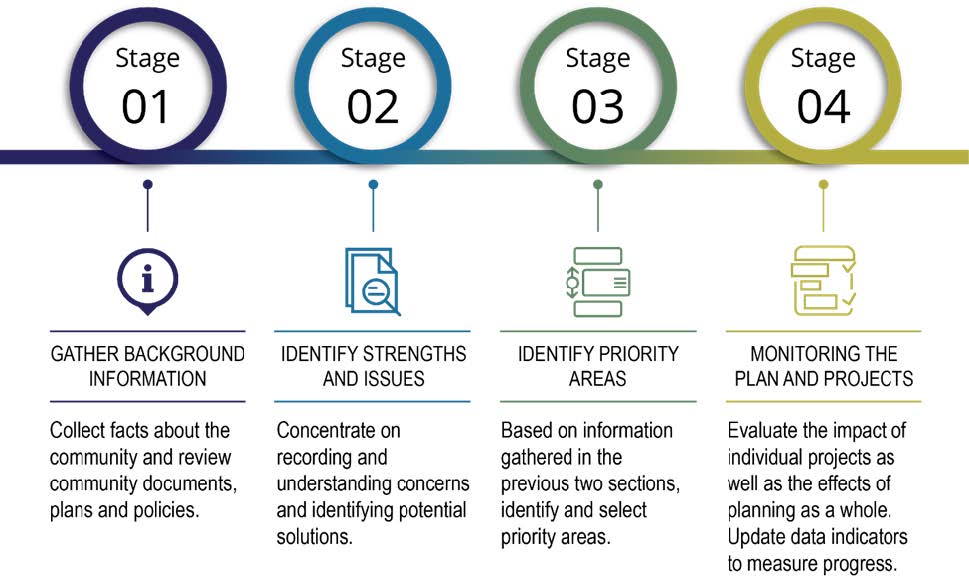
The community planning process is community based. The goals and measurement tools in the plan respond to concerns, suggestions, and feedback from community members, band staff, and Chief and Council.
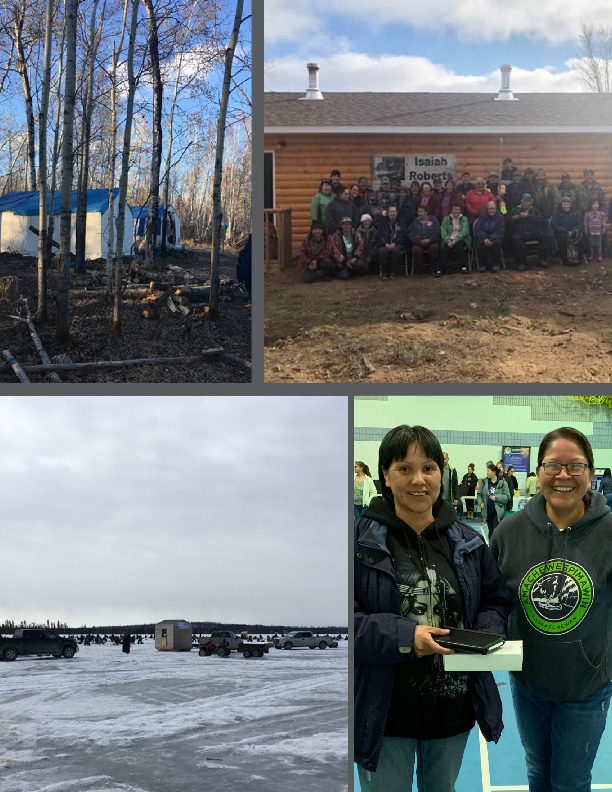
Engagement opportunities included community surveys, school engagements, Treaty Day engagements, urban member Treaty Day engagements, staff questionnaires, Elder interviews, youth and school engagements, and community meetings.
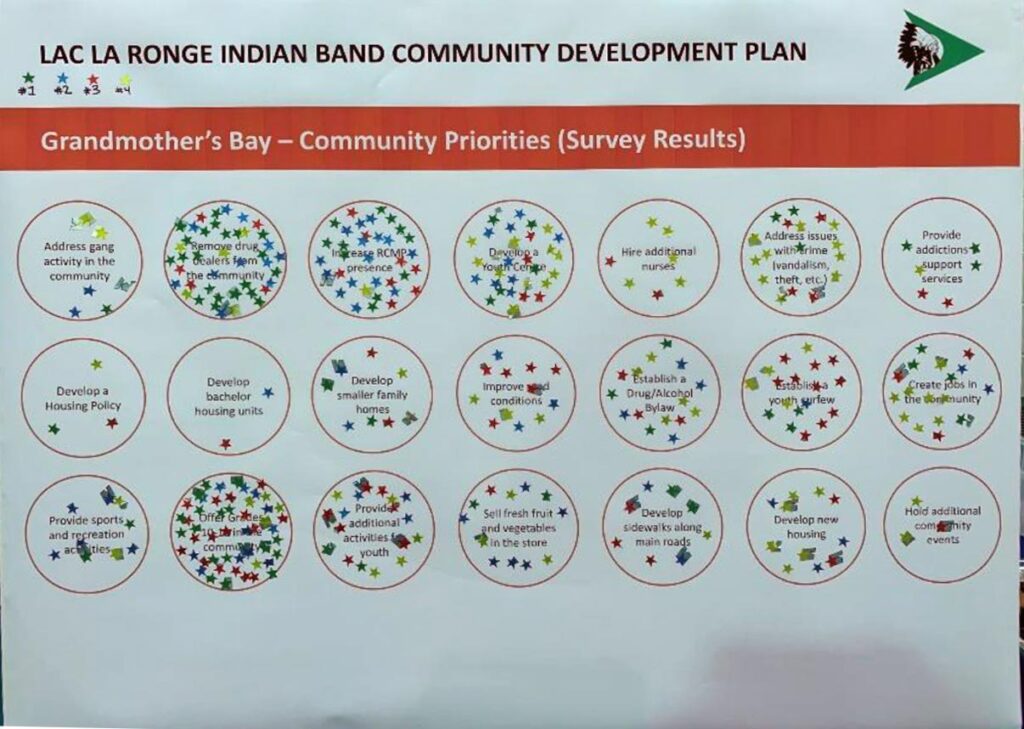
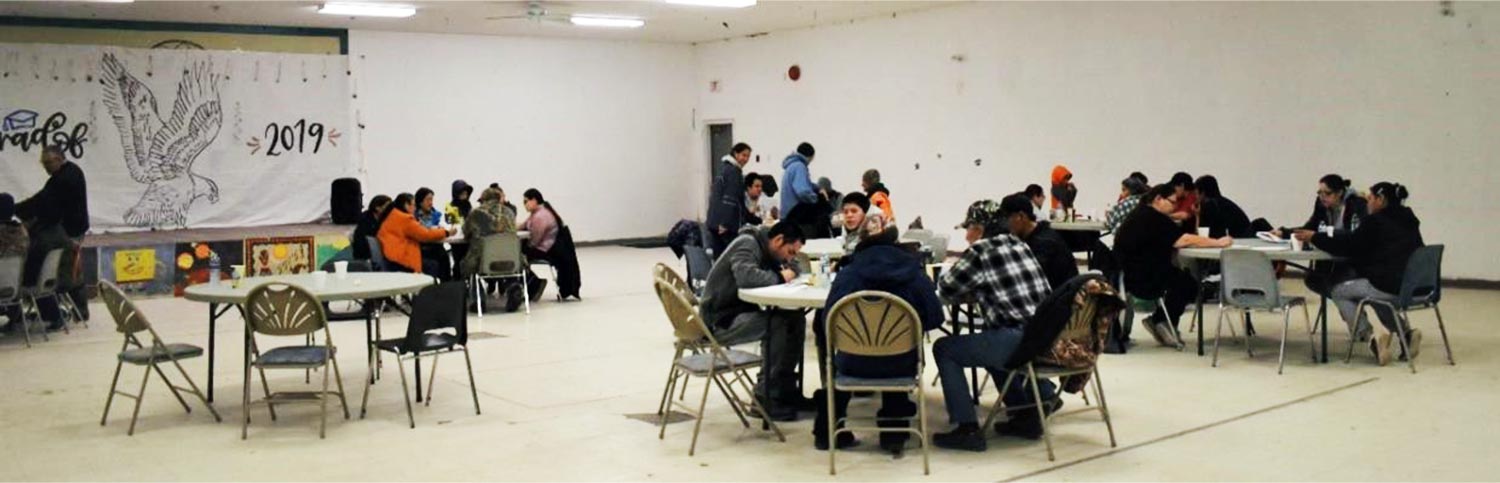
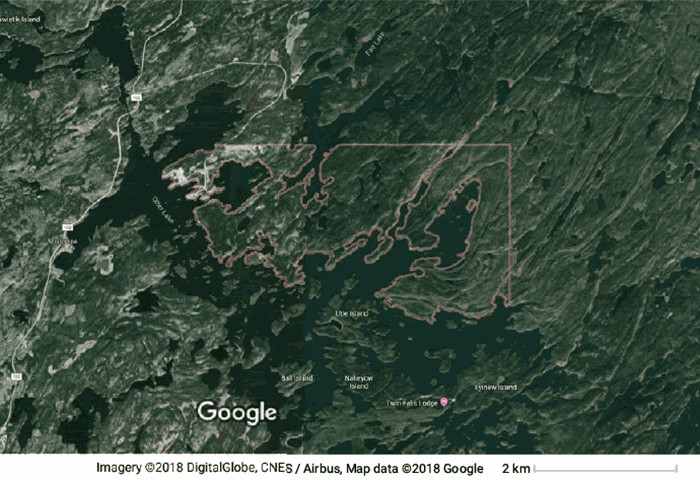
Grandmother's Bay is located on the north shore of Otter Lake along the Churchill River system. The community has a strong relationship to land, water, culture, and local services.
Grandmother's Bay is located approximately 100 kilometres north of La Ronge. It was established as a reserve in 1970 as part of the Lac La Ronge Indian Band. Before reserve establishment, the area was considered a trapline, but more families settled in one area and a community formed.
Before the all-weather road was built, the community was accessed by ice road in winter and by barge in summer. Communication was limited to two-way radio. Major infrastructure development began in the 1990s and continued with road access, power, water and sewer infrastructure, telecommunications, the health clinic, day care, local store, cell tower, and school.
Due to the relative isolation, Grandmother's Bay members have been able to maintain strong cultural practices.
Demographic information is maintained through the population reports and yearly membership statistics. These figures support planning decisions and help track community change over time.
Action Area 1: Capitalize on Our Assets to Stimulate Entrepreneurship.
Action Area 2: Open Communication, Governance, and Leadership.
Action Area 3: Re-Invent Housing.
Action Area 4: Promote Recreation and Wellness.
Action Area 5: Empower Youth.
Action Area 6: Build Connections.
LLRIB undertakes strategic planning every 3-5 years to identify the overarching vision and priority goals, outcomes, and strategies that support the most critical functions the Nation must take. The Strategic Plan vision is Tradition - Innovation - Success.
The five strategic goals include enhancing Woodland Cree culture and language, improving physical, social, mental, and spiritual well-being, strengthening housing conditions, enhancing education programs and services, and building members' independence and life skills.
Community feedback collected through engagement helped create the guiding goals and actions in the plan. Based on member input, a planning wheel was developed with eight priority areas surrounded by the theme of culture.
Governance goals include enhancing safety and security, addressing gang activity, developing and enforcing bylaws, and improving communication between members and leadership.
The 2012 plan emphasized open communication, regular community and Band-wide meetings, welcoming spaces for sharing ideas, and stronger communication within and among LLRIB communities.
Land, Resources and Environment goals focus on protecting lakes, water sources, traditional and historic sites, cultural camp areas, burial grounds, and other sensitive places.
The Lands and Resource Office protects traditional lands and activities and supports meaningful engagement in decisions about resource development and land use.
Health goals include access to programs and services, emergency response, addictions and mental health support, home care, medical transportation, community safety, recreation, nutrition, and physical activity.
Education goals include youth programs, adult skills training, community events that promote education, land-based learning, post-secondary support, upgrading and training programs, and long-term education opportunities in the community.
Infrastructure priorities include water, sewer, roads, lighting, communications, community facilities, solid waste management, transportation, and regular maintenance of public spaces and buildings.
Housing goals focus on access to appropriate housing, home ownership communication, renovations, elders' housing, bachelor units, additional homes, and reducing overcrowding.
Economic goals include creating employment opportunities, supporting local commercial enterprises, improving access to essential products, and building on the community's interest in eco-tourism and regional economic activity.
The Community Development Plan is intended to be everyone's plan. Community members, champions, Chief and Council, and staff each have roles in implementation.
Community members contribute strategies based on their passions and strengths, participate in events, stay informed, and honour the work that has been done. Champions provide advice, support coordination, connect members, and mentor future champions.
Chief and Council implement and report on the plan, while staff use the objectives to guide ongoing work, proposals, engagement, and funding requests.
The plan is a living document. Monitoring documents activities and achievements on an ongoing basis. Evaluation occurs every five years or more often if needed. Updates follow each evaluation so the plan continues to reflect community needs and priorities.
The Implementation Table summarizes community priority areas, describes their relative importance, and identifies required resources. It should be used when applying for grants and project funding so leadership, departments, and community organizations are working toward the same goals.

Social
Social goals include inspiring youth, supporting life skills, increasing parent involvement, addressing violence, providing transportation, and connecting members with culture through land-based learning and Elder teachings.